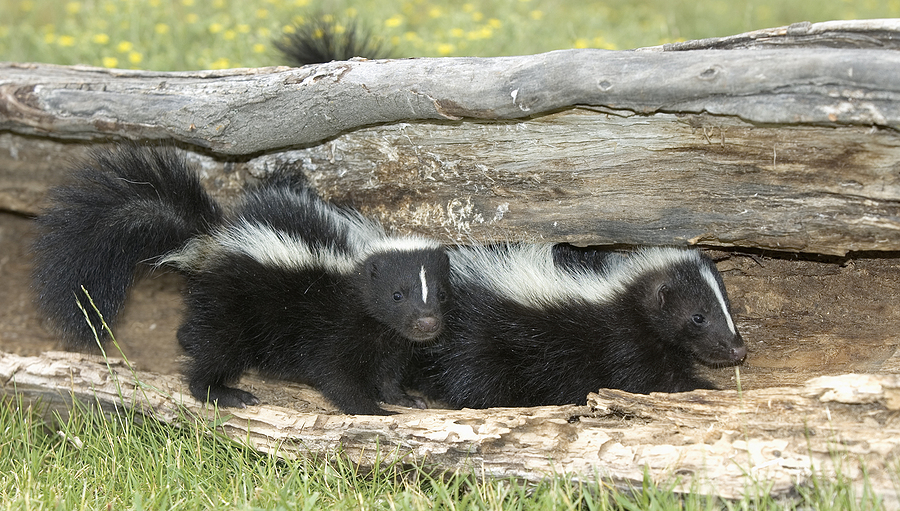
A skunk on your property isn’t just an unpleasant surprise—it can mean damaged lawns, stressed pets, and the constant anxiety of an unwanted close encounter. The good news is that most skunk problems are preventable. By understanding what draws them in and how to make your property less appealing, you can keep these animals at a safe distance without causing them harm.
This guide breaks down the most effective, humane strategies for skunk deterrence—from removing attractants to installing physical barriers—so you know exactly what works and when to call in a professional.
What Attracts Skunks to Your Yard?
Skunks are opportunists. They come to your yard because it offers something they need—usually food or shelter. According to Humane World for Animals, skunks are mainly attracted to easy pickings like garbage and pet food left out at night, as well as convenient denning sites such as wood and rock piles, elevated sheds, and openings under porches and crawl spaces.
Here’s what commonly draws skunks to residential yards:
- Unsecured trash cans — Skunks will tip over or rummage through garbage bags and bins without tight-fitting lids
- Pet food left outdoors — Dog and cat food left outside overnight is a reliable food source for foraging skunks
- Grubs and insects in your lawn — The University of Maryland Extension notes that skunks dig cone-shaped holes roughly 3 inches across in their search for grubs and larvae, causing noticeable lawn damage in the process
- Compost piles — Open compost bins containing food scraps attract skunks through scent alone
- Spilled birdseed — Ground-level seed scattered below feeders offers an easy, low-effort meal
- Brush and debris piles — Dense, cluttered areas make ideal denning spots, especially during breeding season
Removing these attractants is the most important first step to skunk removal and control. Without a reliable food source or shelter option, skunks have little reason to stick around.
How Can You Naturally Deter Skunks?
Several sensory deterrents can make your yard feel unsafe or unwelcoming to skunks, encouraging them to move on without any direct intervention.
Motion-Activated Devices
Colorado State University Extension notes that skunks are nocturnal and reclusive by nature. Motion-activated sprinklers, lights, and noise-emitting devices exploit this instinct. When triggered, they startle skunks and signal that the area isn’t safe. Position them near garbage bins, garden beds, or known entry points for the best results.
Scent-Based Repellents
Certain strong scents can discourage skunks from lingering near your home. Commonly used options include:
- Citrus peels — Scatter orange, lemon, or lime peels around garden edges and entry points, replacing them regularly to keep the scent active
- Castor oil spray — Mix 2 tablespoons of castor oil with 1 tablespoon of dish soap and 1 gallon of water, then spray along fences and garden perimeters
- Capsaicin or pepper-based sprays — Boiling hot peppers in water creates an effective deterrent spray for problem areas
It’s worth noting that Humane World for Animals advises against predator urine products, citing concerns about the inhumane conditions under which they’re typically produced.
Strategic Planting
Some plants naturally repel skunks. Crown Imperial (Fritillaria imperialis) emits a strong musky odor that skunks find unpleasant. Daffodils contain toxic alkaloids that skunks instinctively avoid. Thorny shrubs like holly and rose bushes planted along fences or property edges also create a physical and sensory barrier worth considering.
What Are the Best Physical Barriers?
The most reliable long-term solution is exclusion—physically blocking skunks from denning under or within your structures. The Internet Center for Wildlife Damage Management (ICWDM) recommends covering all ground-level foundation openings with wire mesh, sheet metal, or concrete. Where skunks can gain access by digging, their guidance is to bury ½-inch weave fence mesh 2 inches below the ground, extending it perpendicular from the protected area by at least 12 inches.
Here’s how to approach exclusion effectively:
Sealing Deck and Shed Foundations
Install ¼-inch hardware cloth or galvanized metal flashing around the base of decks, porches, and sheds. The barrier should be buried 6–12 inches underground and bent outward in an L-shape to prevent digging. This L-footer design is recommended by both ICWDM and Humane World for Animals as the most effective method of long-term exclusion.
One-Way Doors
If a skunk is already denning under a structure, a one-way door provides a humane solution. Secure the door over the main entrance—it allows the skunk to exit but prevents re-entry. After a few nights of good weather with no signs of activity, remove the door and permanently seal the opening. Always check first that no dependent young are present before installing a one-way door.
Sealing Foundation Openings
Inspect your home for gaps, cracks, and openings near vents or utility lines. Cover these with durable materials like chicken wire, welded mesh, or hardware cloth. Use flour sprinkled near suspected entry points to track footprints and confirm whether a skunk is actively using an area before sealing it.
When Should You Call a Professional?
If skunks have already established a den, pose a potential health risk, or keep returning despite your best efforts, it’s time to contact a licensed wildlife removal service.
There are specific situations where professional intervention is the right call:
- A skunk is exhibiting abnormal behavior—limb paralysis, circling, unprovoked aggression, or disorientation. Humane World for Animals lists these as potential signs of rabies, and the skunk should not be approached under any circumstances
- Multiple skunks are denning on the property
- A skunk has entered a living space or is trapped inside a structure
- DIY methods have failed after consistent, repeated application
The skunk is classified as a rabies vector species alongside foxes, raccoons, and bats. According to Colorado State University Extension, the risk of rabies appears highest between February and May—the breeding season. If bitten, wash the wound immediately with soap and water, retain the animal if possible, and seek medical attention within 72 hours.
Licensed professionals are equipped to trap and relocate skunks in compliance with local wildlife regulations, and they can identify and seal all potential entry points that may not be obvious to homeowners.
Frequently Asked Questions
How do I remove skunk spray odor?
Skip the tomato juice—it only masks the smell. The most effective home remedy is a solution of 1 quart of 3% hydrogen peroxide, ¼ cup of baking soda, and 1 teaspoon of liquid dish soap. Wet, lather, and allow the solution to sit for 10–15 minutes before rinsing thoroughly. Avoid the eyes and mouth, and do not store this mixture, as pressure can build up inside a sealed container.
Are skunks nocturnal?
Yes. Skunks are primarily nocturnal, though they may occasionally forage during the day—particularly in spring when females are raising young and require extra food. Daytime activity alone isn’t cause for alarm, but skunks displaying erratic behavior during daylight hours should be reported to animal control.
Will skunks spray without warning?
Rarely. Skunks prefer to avoid conflict and will give clear warning signals before spraying—stamping front feet, raising their tail, hissing, and turning their hindquarters toward the perceived threat. Move away slowly and quietly if you observe these behaviors.
How do I know if a skunk is living under my deck?
Look for small, cone-shaped holes in nearby lawn areas, a persistent faint musky odor near the structure, or tracks in soft soil. You can loosely plug the suspected entry point with leaves or straw—if a skunk is present, it will push through overnight.
Protect Your Property Before Problems Start
Keeping skunks away comes down to consistent prevention. Remove food sources, secure your trash, seal foundation gaps, and install physical barriers before skunks have a chance to establish a den. Most skunk encounters are avoidable with a few straightforward steps taken at the right time of year.
For homeowners dealing with persistent skunk activity, professional removal is the safest and most effective route—especially when rabies risk is a concern.
Need help with skunk removal in Indianapolis or the surrounding area? Our licensed wildlife control team provides safe, humane skunk deterrence and removal services across the Indianapolis metro. Contact us today to protect your home and keep your family safe.
Related Post: Wildlife-Proofing Your Home: Tips for Every Season